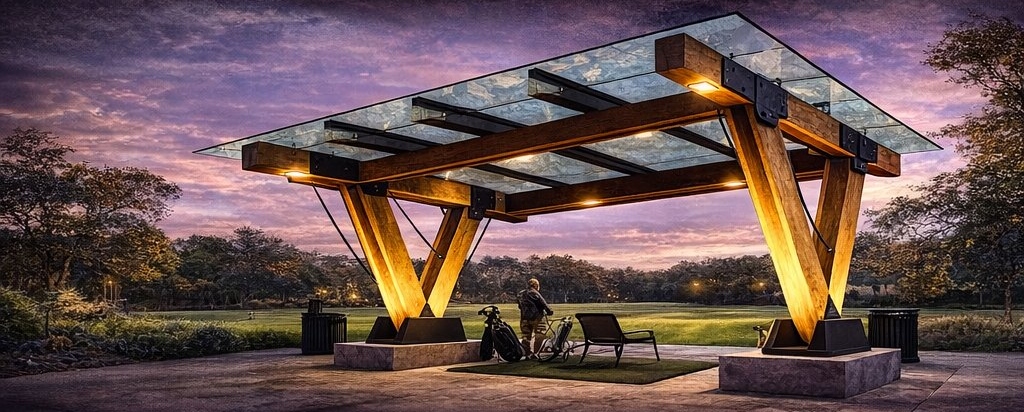
Two timbers. One base. Infinite scale.
Two independent 10×14 Douglas Fir timbers — a front leg and a back leg — each at 20°, anchored to a single steel base plate.
The cap beam (also 10×14 Douglas Fir) sits on top of the V. Cross beams butt into it using steel hangers — no through-bolts, no visible hardware on the underside. Every element is deliberate.
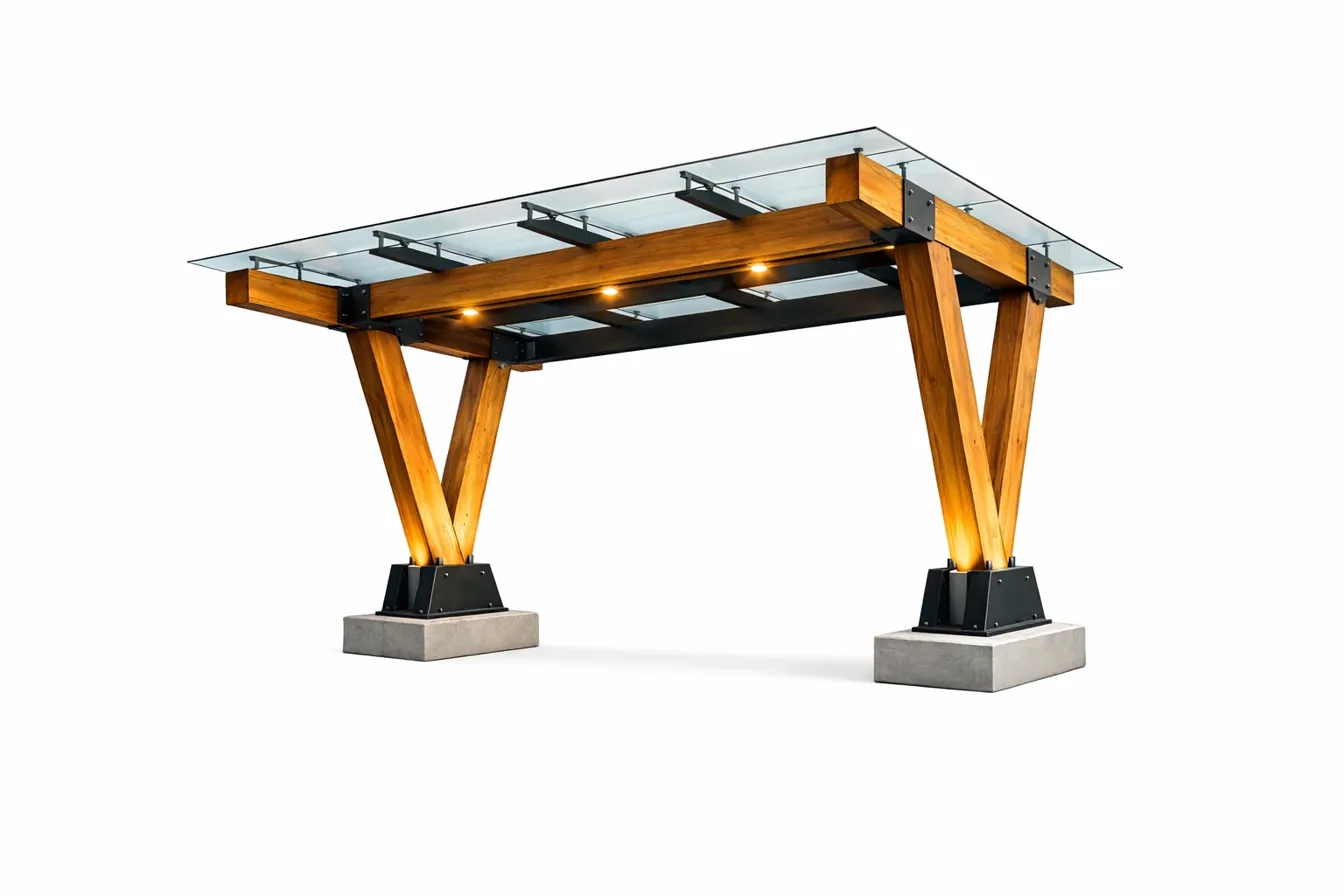
The V-leg up close.
From raw construction to finished installation — the V-leg system in every phase.
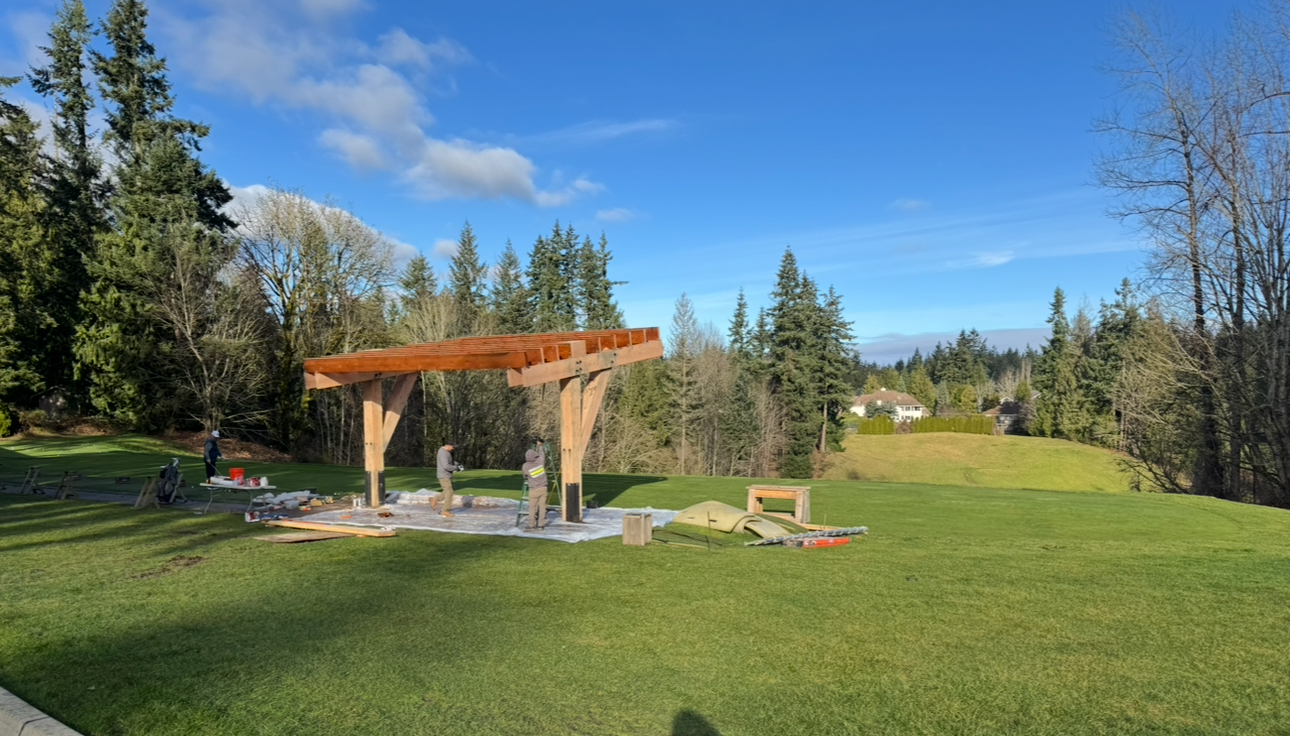
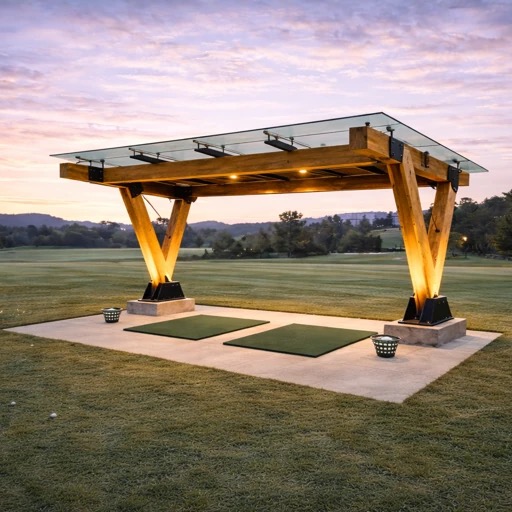
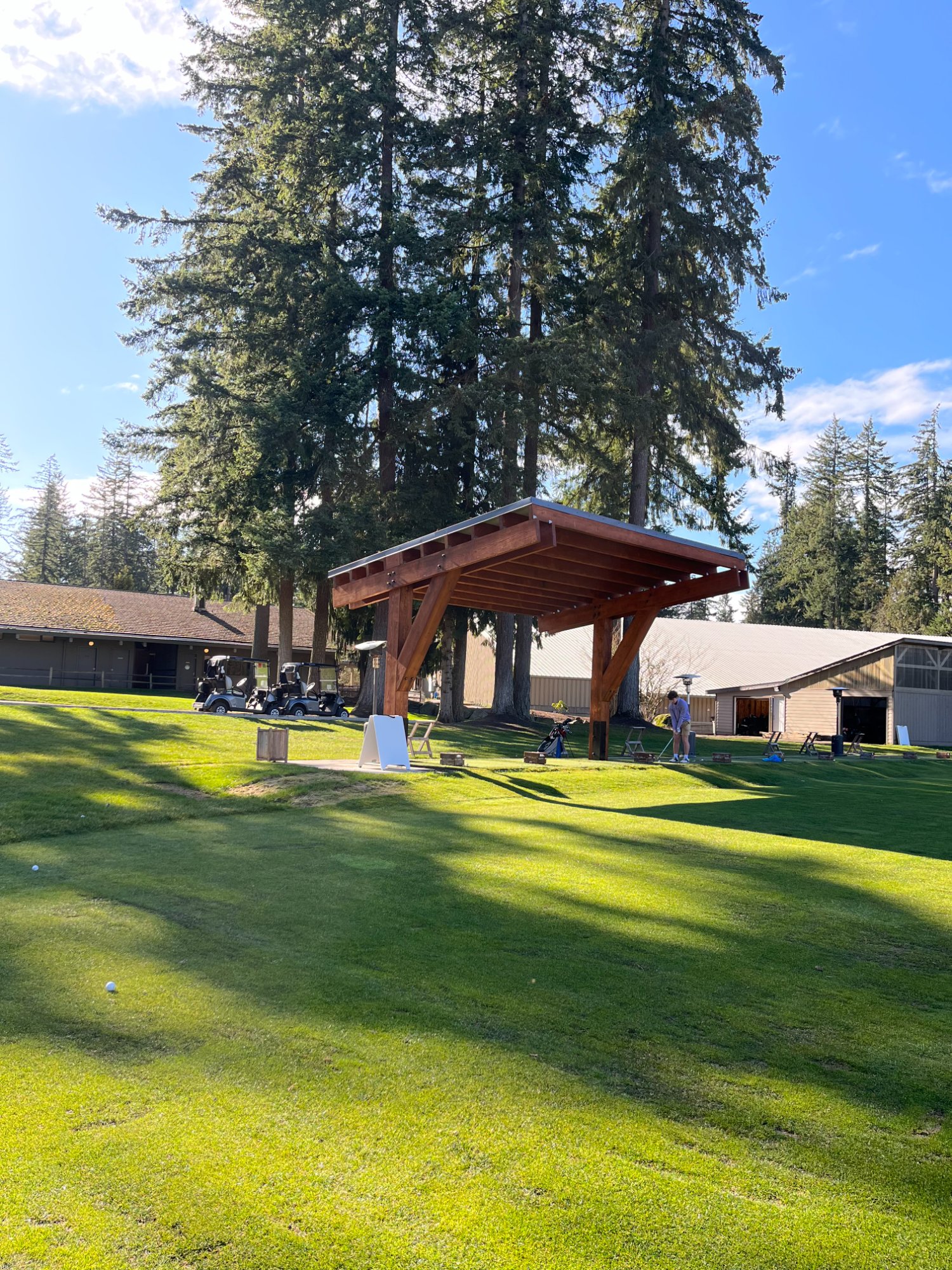
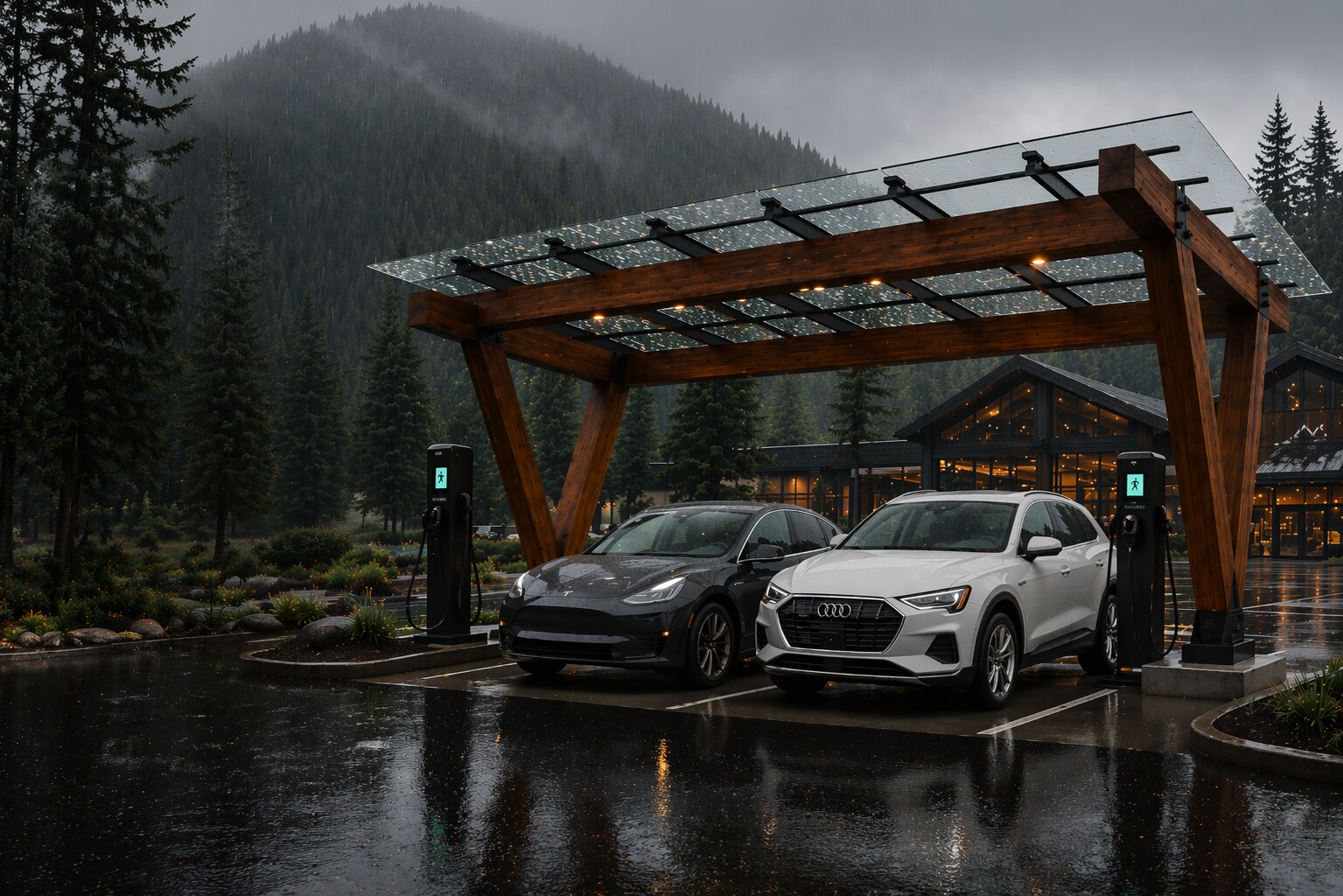
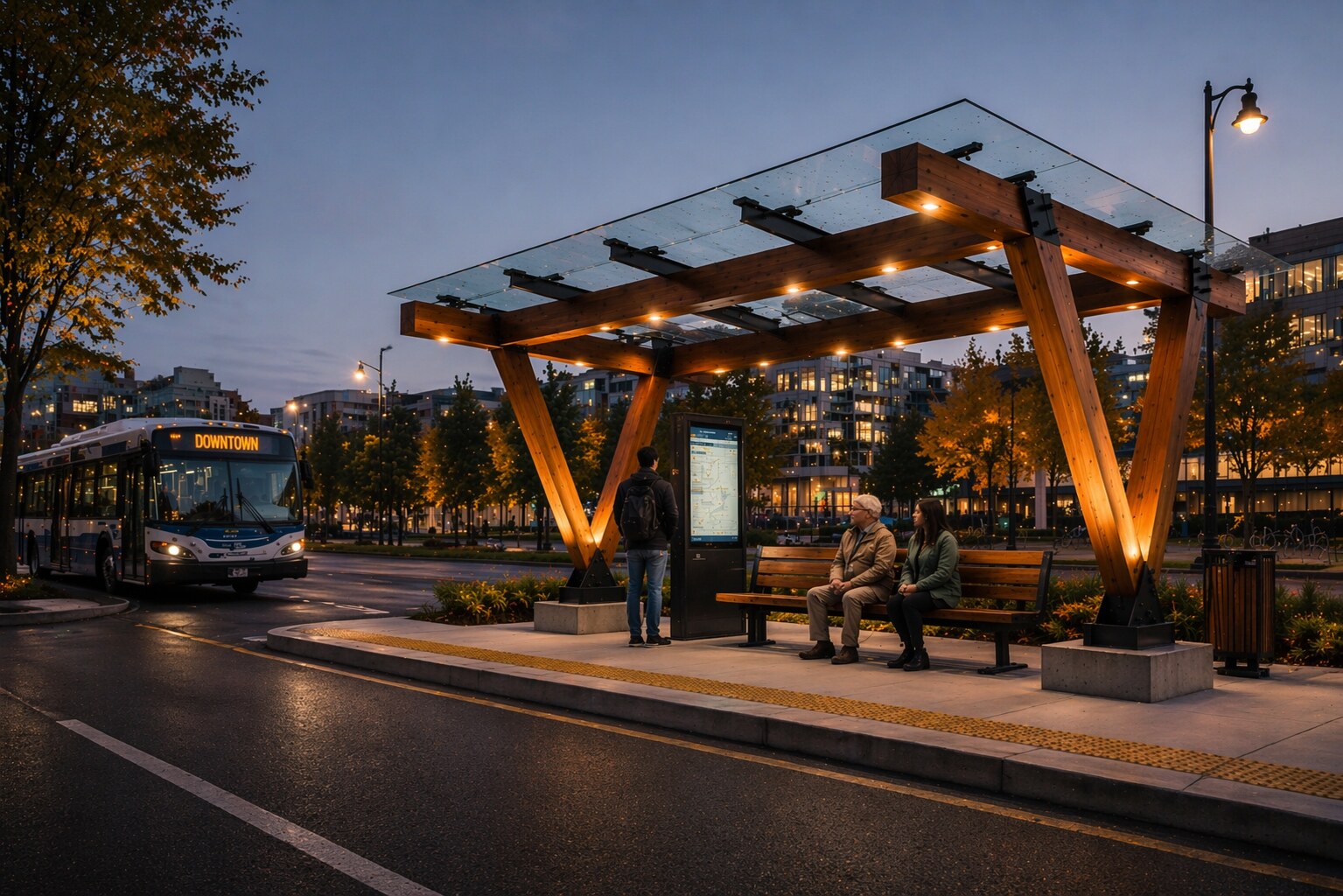
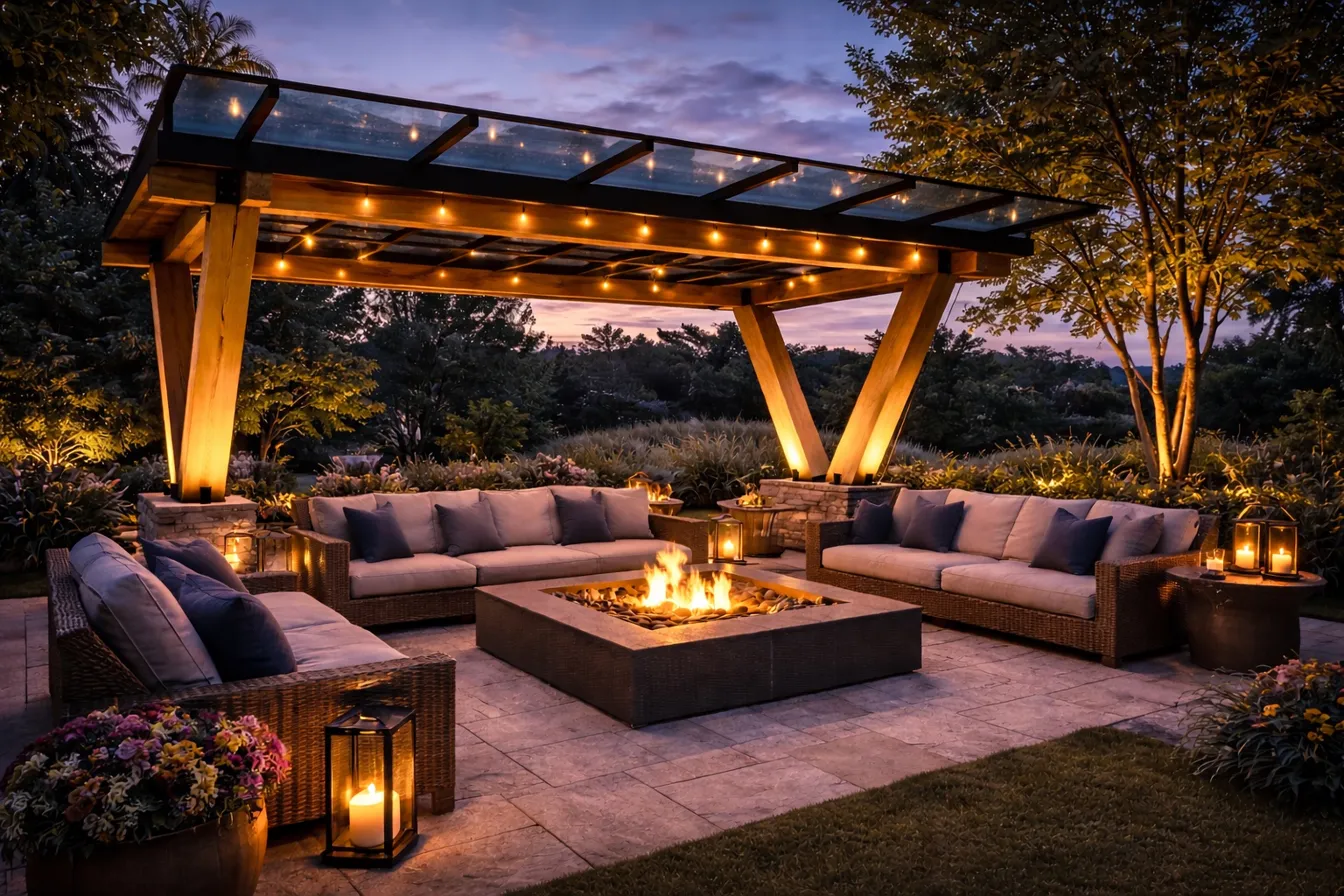
The structural signature behind every TimberShield application.
The V-leg system is the shared architectural element across every TimberShield build. You'll see it deployed at EV charging canopies, auto dealership porte-cochères, commercial entrances and hospitality canopies, transit shelters and bus stops, golf practice covers, and residential architectural canopies. One structural element. Every application context.
Why a V instead of a post?
Load distribution
A single vertical post concentrates load at one point. The V spreads the load across two anchor points — reducing moment forces on the footing and eliminating the risk of lateral rotation under wind load.
Architectural cantilever
The V geometry creates a structural triangle at the base. A vertical post would require a header beam and additional support — the V eliminates both while keeping the front clearance open.
Modular scalability
Every bay is structurally independent. One V-leg assembly supports one bay. Adding bays means adding V-legs — the structure never gets structurally heavier per bay as it gets longer.
Visual distinction
The V-leg is instantly recognizable and unmistakably architectural. No other timber structure on the market uses this geometry — it's what makes a TimberShield canopy different from a hundred yards away.
See the V-leg in person.
Contact TimberShield to discuss your project — or use the calculator to build a preliminary estimate before you reach out.